
PROJECTS
Empowering Reproductive Health Choices for All: An Integrated Community-Based Family Planning Outreach in Ibadan, Nigeria
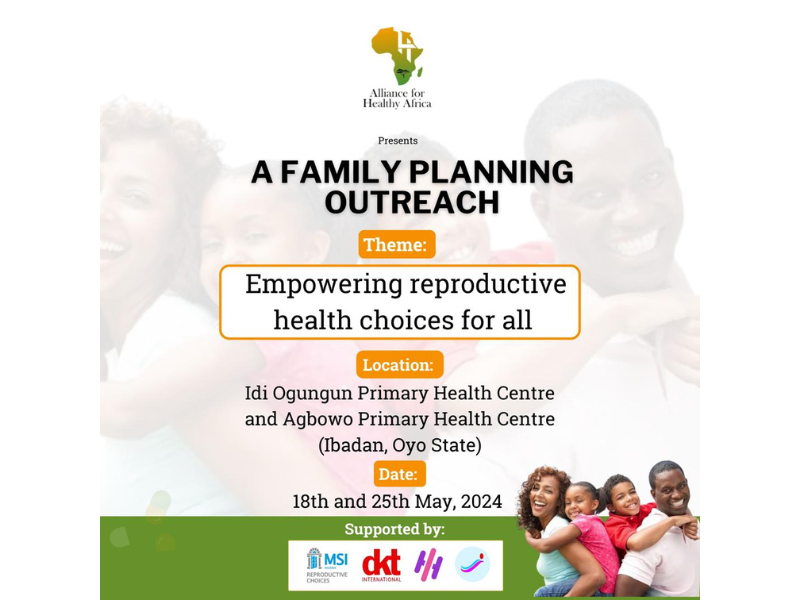
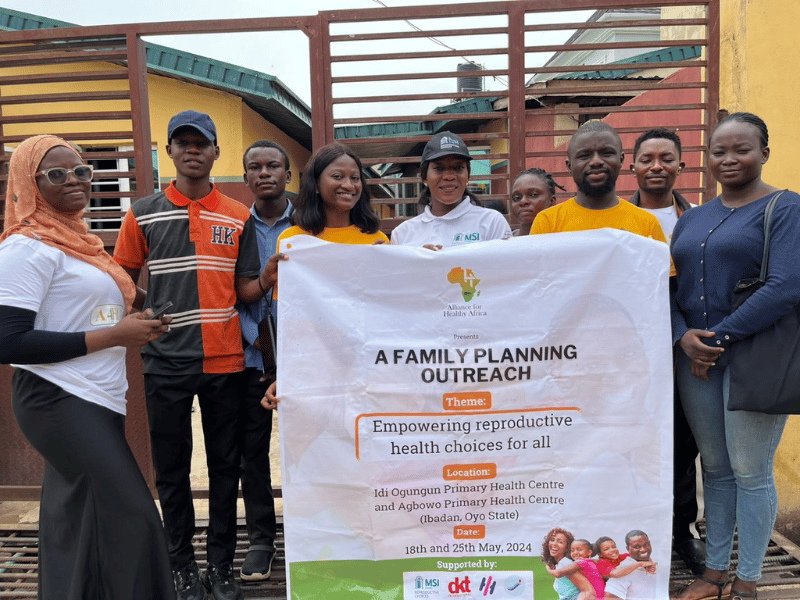
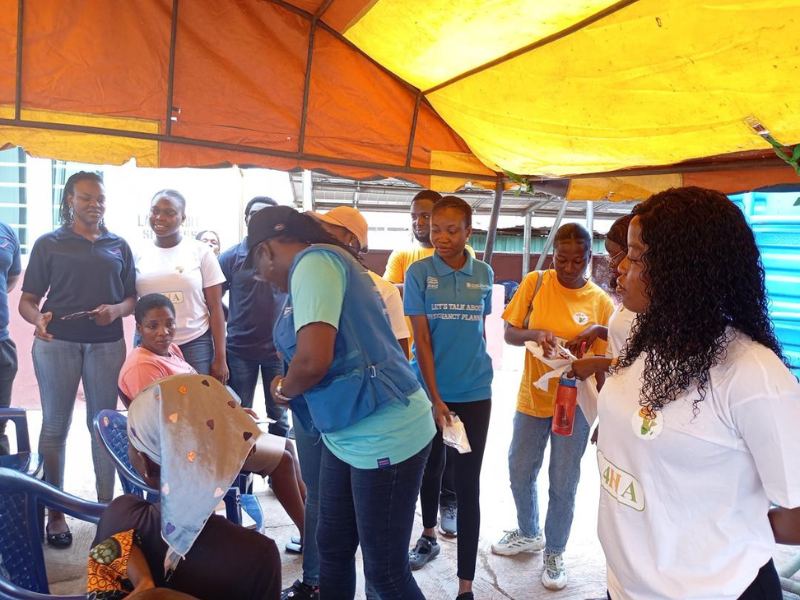
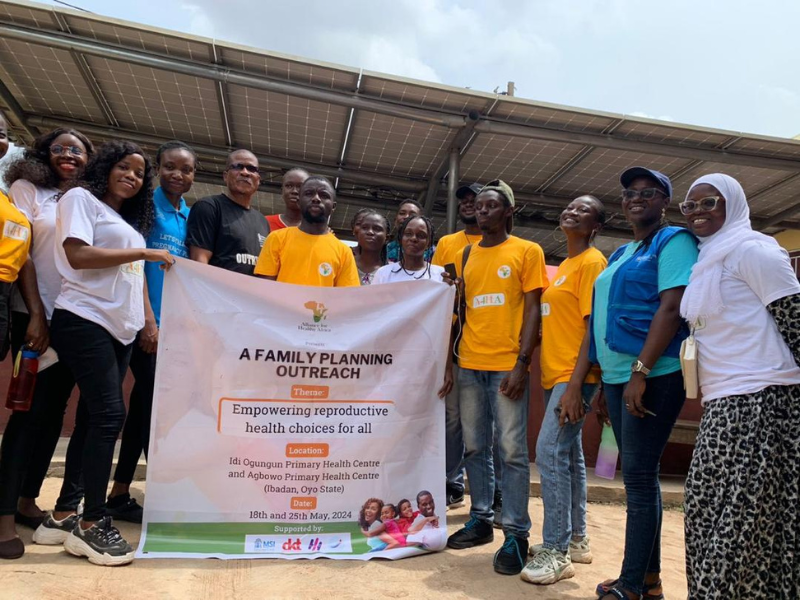
We visited two towns in Ibadan (Agbowo and Idi Orogun) in Oyo State to educate members of the community, including carrying out essential screening tests for sexually transmitted diseases. In collaboration with the primary healthcare centres, we spoke with residents, community leaders and healthcare workers.
SIGNIFICANCE
Effective reproductive health choices remain a critical issue in Nigeria, where low awareness and utilisation of modern contraceptive methods contribute to high maternal mortality and unintended pregnancies, largely due to significant socio-cultural barriers. In Ibadan, Oyo State, persistent traditional beliefs and limited access to quality family planning services have left many women, particularly young and underserved populations, vulnerable. Recognising these challenges, the “Empowering Reproductive Health Choices for All” program aimed to address gaps in knowledge and accessibility. Spearheaded by ACES Africa in local health centres, the program leveraged both public and private partnerships to build community capacity for informed decision-making about family planning. By integrating educational sessions with direct product distribution and health services, the initiative sought to debunk myths, overcome gendered norms, and shift communal decision-making processes around sexual health. The outreach served as an advocacy intervention to promote reproductive rights and an accountability mechanized to document community needs and inform interventions(PlanWise).
ADVOCACY
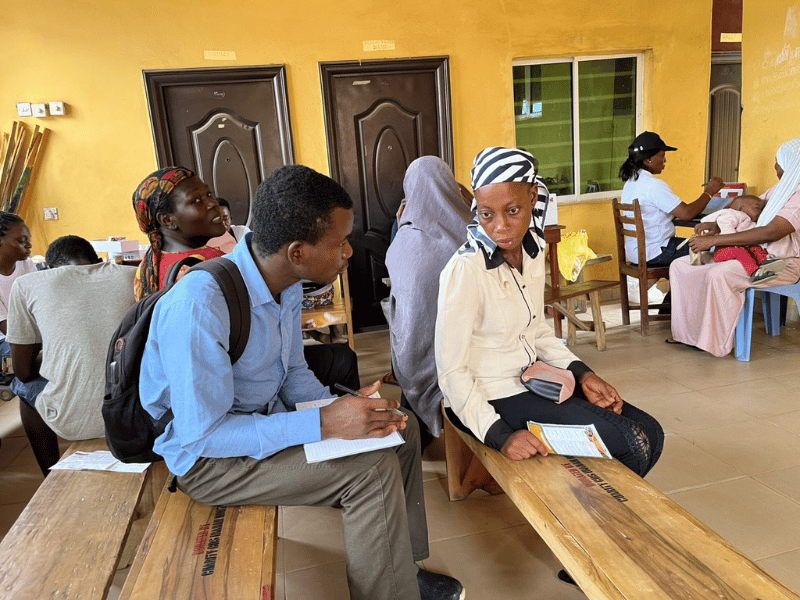
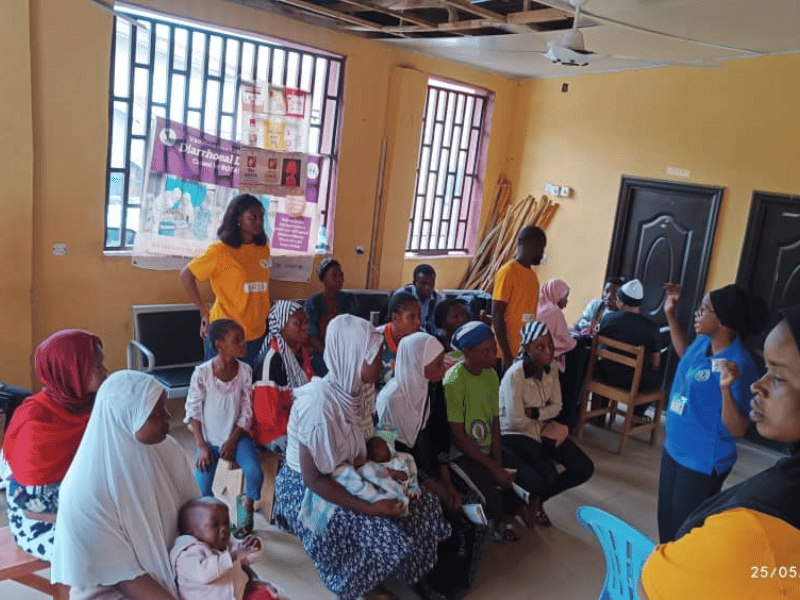
The outreach deployed a multifaceted advocacy intervention comprising health education sessions, counselling, and on-site provision of modern contraceptive products. Key activities included structured counselling and advice for personalised contraceptive choice, research interviews to capture participant insights, and various family planning methods, reinforced by direct distribution of condoms, emergency contraceptives and other reproductive supplies alongside HIV screening tests. The initiative was designed to empower individuals, particularly youth and women, to make informed decisions about sexual and reproductive health, as well as challenge entrenched cultural barriers, thereby advancing reproductive autonomy and accountability in community health practices. The program also sought to assess the willingness and barriers to adoption of digital platforms like planwise in meeting the sexual and reproductive health needs
METHODOLOGY
With approval and support from the Oyo State Primary Health Care Board, the intervention was conducted at Idi Ogungun and Agbowo Primary Health Centres in Ibadan, Oyo State. The outreach was structured in clearly defined blocks, including Registration, Counselling, Health Education, Dispensing, Research and Documentation, and Medical Testing. Data was collected through brief, structured interviews administered to participants during the sessions. The outreach spanned 4 weekends in May 2024, targeting over 1000 girls and women of reproductive age across four primary healthcare centres, with an additional focus on engaging community leaders and local healthcare providers as intended decision-makers. The advocacy approach was community-based and participatory; it combined direct service provision, capacity-building, and robust data collection to assess knowledge levels on contraceptives, cultural barriers, and service accessibility. This methodology ensured that real-time feedback informed immediate service delivery while generating actionable data for local health policy adjustments and intervention design.
RESULTS
The outreach resulted in measurable improvements in community awareness and acceptance of modern family planning methods. Health education sessions led to increased understanding among participants regarding the benefits, proper usage, and potential adverse effects of various contraceptive methods, including intrauterine devices, implants, pills and emergency contraceptives. Counselling sessions helped tailor contraceptive choices to individual needs, thus promoting personalised family planning strategies. Pre- and post-engagement surveys revealed a 45% increase in knowledge levels on modern contraceptives. In comparison, on-the-spot adoption of services such as implant insertion and condom uptake increased by approximately 35% and 60%, respectively. Over 70% of participants indicated a willingness to continue using modern methods, and 65% expressed interest in digital platforms that offer confidential family planning advice.
The research and documentation component revealed that while participants initially held reservations due to ingrained cultural beliefs, post-outreach feedback indicated a significant shift in attitude and openness to contraception. The distribution of over 600 condoms, 150 packs of emergency contraceptives, and 300 educational pamphlets ensured immediate access to essential supplies. The integrated HIV testing services also referred four individuals for further care, highlighting the value of integrated sexual health services. Overall, the intervention fostered collaborative learning and empowerment, reduced cultural stigmas, and laid the groundwork for sustained accountability and advocacy in reproductive health within the community.
PROGRAM IMPLICATIONS
The findings highlight the importance of integrated, community-based approaches in addressing reproductive health challenges. Policy implications include the need for more decentralised and tailored family planning services that directly respond to the unique cultural and socioeconomic contexts of local communities. The intervention demonstrated that providing comprehensive education and accessible services can significantly shift attitudes towards family planning, thereby reducing the risk of maternal mortality and unintended pregnancies. Engagement with local health facilities and community leaders was critical in legitimising the service delivery and encouraging sustained dialogue on reproductive rights. The outreach highlighted how the coupling of education with product distribution and health testing meets immediate needs and builds the foundation for long-term behaviour change. Lessons learned emphasise the importance of continuous monitoring and community feedback to refine advocacy strategies. Additionally, the positive reception to digital platforms for confidential counselling suggests a promising avenue for scaling up remote or hybrid family planning initiatives. Policymakers and program designers are thus encouraged to invest in collaborative, data-driven frameworks that blend traditional community outreach with innovative digital solutions, ensuring that reproductive health services are both accessible and culturally responsive.